Herniated Disc Treatment in New York
If you are experiencing back pain, neck pain, numbness, or weakness that radiates into your arms or legs, you need answers from a team that understands both the medical condition and the impact it has on daily life. Patients seeking herniated disc treatment in New York can turn to Long Island Neurosurgical Associates (LINA) for comprehensive evaluation and treatment by a highly skilled neurosurgical team that specialises in spine conditions.
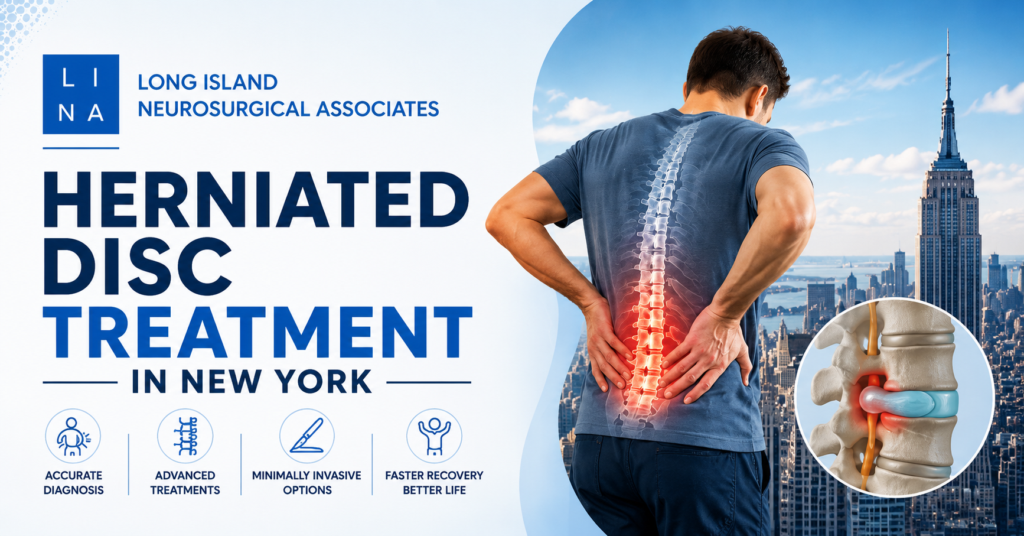
A herniated disc occurs when the soft, gel-like centre of a spinal disc pushes through a tear in the tougher outer layer. This can irritate or compress nearby nerves, leading to pain, numbness, tingling, or weakness that may be felt at the site of the herniation or radiate elsewhere in the body.
Our team helps patients understand what is going on, what treatment options might be right for them, and what to do next. Depending on the location and severity of the herniation, care may include rest and activity modification, physical therapy, medication, minimally invasive spine surgery, or open surgical repair.
What Is a Herniated Disc?
The spine is made up of vertebrae separated by discs that act as cushions, allowing flexibility and absorbing shock during movement. Each disc has a tough outer layer and a soft inner core. A herniated disc, sometimes called a slipped or ruptured disc, happens when the inner core pushes through a crack or weak spot in the outer layer.
Herniated discs most commonly occur in the lower back (lumbar spine) and neck (cervical spine), though they can develop anywhere along the spine. The condition may result from age-related wear and tear, a sudden injury, repetitive strain, or improper lifting technique.
Not every herniated disc causes symptoms. Some are discovered incidentally on imaging done for other reasons. Symptoms typically develop when the herniated material presses on a nearby nerve root or the spinal cord itself.
Signs Patients Should Look For and When to See a Specialist
Patients are usually the first to notice pain, numbness, or weakness that doesn’t improve with rest. Concerns may also be identified by a primary care physician during a routine visit. If you have:
- Persistent back or neck pain that doesn’t improve with rest
- Pain that radiates into an arm, hand, leg, or foot
- Numbness or tingling in the arms, hands, legs, or feet
- Muscle weakness affecting your grip, walking, or balance
- Pain that worsens with sitting, standing, coughing, or certain movements
- Difficulty performing everyday activities due to pain or weakness
- Loss of bladder or bowel control
You may want to schedule an evaluation. Some patients have mild, manageable symptoms, whereas in more advanced cases, others may experience significant nerve compression that affects strength, sensation, or coordination.
It is important to seek specialist advice right away if you experience sudden loss of bladder or bowel control or rapidly worsening weakness in the legs, as these can indicate a more serious condition requiring urgent evaluation. For less severe symptoms, it is still worth seeking care if pain persists beyond a few weeks or interferes with daily activities.
Patients also seek second opinions from Long Island Neurosurgical Associates. If you have already been diagnosed and want to better understand treatment recommendations, timing, risks, or expectations for recovery, our team can help explain the next steps.
Evaluation and Diagnosis
A complete neurological and physical exam starts every evaluation. The specialist will assess strength, reflexes, sensation, and range of motion and review the patient’s symptoms and medical history.
Imaging studies are typically recommended when a herniated disc is suspected. An MRI is generally the most useful study, as it clearly shows the discs, nerves, and spinal cord. X-rays or CT scans may also be used to evaluate bone structure or rule out other causes of pain.
At your visit, patients are told exactly what the diagnosis is, what the treatment options are, when treatment may be needed, and whether conservative management is appropriate first.
A timely assessment can reduce uncertainty and help patients understand the need for treatment. It can also help differentiate a herniated disc from other causes of back, neck, or radiating pain that require a different type of care.
Treatment Options for Patients
Not all herniated discs are treated the same way. The treatment plan is based on:
- The location and size of the herniation
- Which nerves, if any, are affected
- The severity and duration of symptoms
- Response to conservative treatment
- The patient’s overall health and activity level
- Questions and goals for the patient
Most herniated discs improve with conservative treatment and do not require surgery. Surgery is generally considered when symptoms are severe, significantly affect function, or fail to improve after a reasonable period of non-surgical care.
Surgical options depend on the location and severity of the herniation. These may include minimally invasive spine surgery for many cases or more extensive open surgical approaches for complex or multi-level disc disease.
| Treatment Path |
When It May Be Considered |
What Patients Should Know |
| Rest, activity modification, and physical therapy |
Mild to moderate symptoms, especially early on |
Many herniated discs improve over several weeks with conservative care and guided exercise |
| Medication and epidural injections |
Pain and inflammation that limits daily activity |
These options can help manage symptoms while the disc heals or while other treatment is planned |
| Minimally invasive spine surgery |
Persistent symptoms, nerve compression, or failed conservative treatment |
This approach uses smaller incisions, often with faster recovery than traditional open surgery |
| Open spine surgery |
Larger herniations, multi-level disease, or complex anatomy |
The surgical team removes the herniated material and relieves pressure on the affected nerve or spinal cord |
| Follow-up and rehabilitation |
After surgery or during conservative treatment |
Care may include physical therapy, activity guidelines, and monitoring for symptom improvement |
Patients across New York turn to Long Island Neurosurgical Associates for spine treatment because of personalised treatment planning and compassionate support throughout the process.
Minimally Invasive Spine Surgery
A minimally invasive approach is an effective option for many herniated discs. This approach generally involves smaller incisions and specialised techniques that allow the surgical team to access and treat the affected disc with less disruption to surrounding tissue.
This treatment option often allows for shorter hospital stays, less postoperative pain, and faster return to daily activities compared to traditional open surgery. Patients are guided through what to expect before, during, and after the procedure, including anaesthesia, incision care, and follow-up.
Since each patient’s anatomy and condition are unique, the most appropriate procedure can only be determined after a full evaluation.
Open Spine Surgery and Recovery
For some patients, open surgery is required to fully address the herniation and relieve pressure on the affected nerve or spinal cord. This approach may be indicated for larger herniations, multi-level disc disease, or cases involving significant spinal instability.
During open surgery, the neurosurgical team carefully removes the herniated disc material and, when needed, addresses any related structural issues to support long-term spinal health. Patients often have questions about the hospital stay, incision care, pain, and what to expect during recovery. The team at Long Island Neurosurgical Associates ensures patients are well-informed before surgery, during their hospital stay, and throughout recovery.
If surgery is recommended, education is the beginning of preparation. Patients should be well informed of the reason for surgery, timing, anaesthesia, type of procedure, expectations for recovery, and follow-up care.
Patients may also need imaging studies, lab work, or medical clearance before surgery. Detailed instructions are provided regarding medications, arrival time, and hospital preparation.
The type of surgery performed will determine the recovery time. Patients who have minimally invasive surgery tend to heal more quickly, while open surgery may require more hospital monitoring and a longer recovery period.
Follow-up visits allow the team to monitor healing, symptom improvement, and any ongoing concerns. Ongoing care may also include collaboration with physical therapy, pain management, and rehabilitation specialists as needed.
Frequently Asked Questions
When Should a Herniated Disc Be Treated?
The optimal timing of treatment depends on the severity of symptoms, whether nerve function is affected, and how the patient responds to conservative care. Many patients improve without surgery, while others benefit from earlier surgical evaluation.
Do you always have to have surgery for a herniated disc?
Not all herniated discs require surgery. Most improve with rest, physical therapy, and conservative treatment. Surgery is typically considered when symptoms are severe, significantly limit function, or fail to improve over time.
What is minimally invasive spine surgery?
Minimally invasive spine surgery is a less invasive approach in which the herniated disc material is accessed and removed through smaller incisions, often allowing for a faster recovery.
What is open spine surgery?
Open spine surgery involves a larger incision to fully access and treat the herniated disc, particularly for larger herniations or more complex cases.
Is Herniated Disc Treatment Covered by Insurance?
Your insurance plan, diagnosis, whether a referral is needed, and the recommended treatment will determine coverage. Our team can assist patients with understanding what is needed for authorisations and documentation.
How long does recovery take after herniated disc surgery?
Recovery time varies based on the type of surgery performed and the patient’s overall health. Minimally invasive procedures often allow for a quicker return to daily activities, while open surgery may require a longer recovery period.
How do I book a consultation?
Make an appointment online or call Long Island Neurosurgical Associates to discuss your symptoms, diagnosis, concerns and preferred office location.
Schedule a Consultation for Herniated Disc Treatment in New York
If you are experiencing back pain, neck pain, or radiating symptoms or have received a diagnosis or recommendation for surgery, contact Long Island Neurosurgical Associates to schedule a complete evaluation.
Call today to make an appointment with a neurosurgical specialist and receive clear next steps for your care.