
Scoliosis and Spinal Deformity Treatment in New York
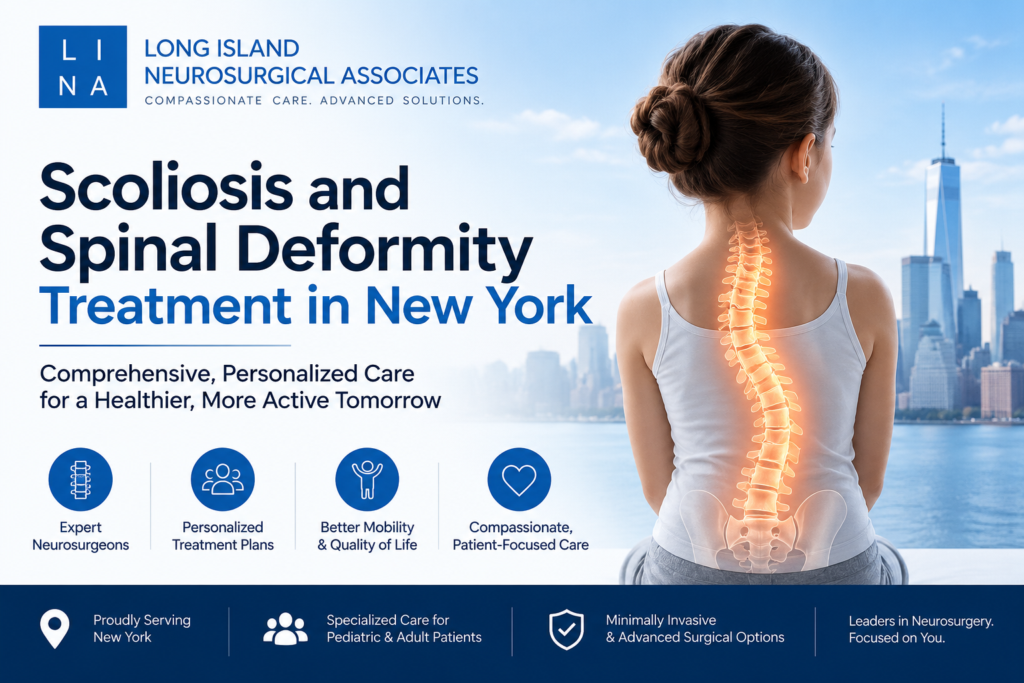
Spinal deformity refers to abnormal curvature or alignment of the spine, most commonly scoliosis (a sideways curve) or kyphosis (excessive forward rounding). These conditions can develop during childhood growth, from degenerative changes in adulthood, or following prior spine surgery or injury.
Our team helps patients and families understand the type and severity of the curve, what treatment options might be right for them, and what to do next. Depending on the patient’s age and the degree of curvature, care may include observation, bracing, physical therapy, or corrective spinal surgery.
What Is Scoliosis and Spinal Deformity?
A healthy spine, viewed from behind, runs in a straight line. Scoliosis occurs when the spine curves sideways, often in an “S” or “C” shape, while kyphosis involves excessive rounding of the upper back. Spinal deformity can also involve a combination of curves in different directions.
In children and adolescents, most scoliosis is idiopathic, meaning no single cause is identified, though it can also occur alongside congenital spine differences present from birth or certain neuromuscular conditions. In adults, spinal deformity most often develops gradually from degenerative changes in the discs and joints of the spine, though it can also result from an untreated curve from adolescence.
Not every curve requires treatment. Many mild curves are simply monitored over time, while larger or progressive curves may benefit from bracing or surgical correction.
Signs Patients and Parents Should Look For
Scoliosis and spinal deformity are often first noticed by a parent, a school screening, or a primary care physician, though adults may notice changes themselves. Signs to watch for include:
- Uneven shoulders, shoulder blades, or waistline
- One hip appearing higher than the other
- A visible curve or rotation of the spine when bending forward
- Back pain that worsens with standing or activity
- Noticeable loss of height or a stooped posture in adults
- Difficulty standing upright for long periods
- In more advanced cases, numbness, weakness, or changes in walking
Children with a mild curve are often simply monitored with periodic imaging, since curves can progress during growth spurts. Adults with new or worsening back pain, posture changes, or nerve-related symptoms should seek an evaluation to determine whether a spinal deformity is contributing to their symptoms.
Patients also seek second opinions from Long Island Neurosurgical Associates. If you or your child has already been diagnosed and you want to better understand treatment recommendations, bracing, timing of surgery, or expectations for recovery, our team can help explain the next steps.
Evaluation and Diagnosis
A complete physical and neurological exam starts every evaluation, including an assessment of posture, curve flexibility, and any signs of nerve involvement. The specialist will also review growth history in children or degenerative changes in adults.
Imaging is central to diagnosing and monitoring spinal deformity. Standing X-rays are typically used to measure the degree of curvature and track changes over time, while an MRI or CT scan may be recommended if nerve compression, congenital abnormalities, or other structural concerns are suspected.
During your visit, patients and families are told exactly what type of curve is present, how severe it is, whether it is likely to progress, and what treatment approach is appropriate.
Treatment Options for Patients
Not all cases of scoliosis or spinal deformity are treated the same way. The treatment plan is based on:
- The type, location, and degree of the curve
- The patient’s age and remaining growth potential, if a child
- Whether the curve is progressing over time
- The presence of pain, nerve symptoms, or functional limitations
- The patient’s overall health and goals
Many patients with mild curves are managed with observation alone, while moderate curves in growing children may be treated with bracing to help prevent further progression. Surgery is generally considered for larger or progressive curves, or when a curve is affecting nerve function or quality of life.
| Treatment Path | When It May Be Considered | What Patients Should Know |
|---|---|---|
| Observation and periodic imaging | Mild curves, especially in growing children | Regular follow-up tracks whether the curve is stable or progressing. |
| Bracing | Moderate curves in children who are still growing | A brace can help slow or prevent progression during remaining growth. |
| Physical therapy | Mild curves or as a complement to other treatment | Targeted exercise can support posture, strength, and comfort. |
| Minimally invasive or open corrective surgery | Progressive or severe curves, or curves causing nerve symptoms | Surgery aims to correct alignment and stabilize the spine using instrumentation. |
| Follow-up and rehabilitation | After surgery or during observation | Care may include physical therapy, activity guidelines, and monitoring of the correction over time. |
Patients and families across New York turn to Long Island Neurosurgical Associates for spinal deformity care because of personalized treatment planning and compassionate support throughout the process, for both pediatric and adult patients.
Corrective Spinal Deformity Surgery
When surgery is recommended, the goal is to correct the abnormal curve as safely as possible, relieve any nerve compression, and stabilize the spine using rods, screws, or other instrumentation. The specific approach depends on the type and location of the curve, the patient’s age, and whether the spine has finished growing.
Patients often have questions about the hospital stay, incision care, pain, and what to expect during recovery. The team at Long Island Neurosurgical Associates ensures patients and families are well informed before surgery, during the hospital stay, and throughout recovery.
Recovery time varies based on the extent of the correction and the patient’s overall health. Follow-up visits allow the team to monitor healing, curve correction, and any ongoing concerns, often in collaboration with physical therapy as needed.
Frequently Asked Questions
When Should Scoliosis Be Treated?
Treatment timing depends on the degree of the curve, whether it is progressing, and the patient’s remaining growth potential. Many mild curves are simply monitored, while progressive or severe curves may need bracing or surgery.
Does Every Curve Require Surgery?
No. Many patients are managed with observation, physical therapy, or bracing. Surgery is typically considered for larger, progressive curves or when a curve is affecting nerve function or daily life.
Can Adults Develop Scoliosis?
Yes. Adult spinal deformity often develops gradually from degenerative changes in the spine, or it may represent a curve from adolescence that has progressed over time.
What Does a Brace Do?
A brace is used in growing children with moderate curves to help slow or prevent further progression during the remaining growth period. It does not typically reverse an existing curve.
Is Spinal Deformity Treatment Covered by Insurance?
Your insurance plan, diagnosis, whether a referral is needed, and the recommended treatment will determine coverage. Our team can assist patients with understanding what is needed for authorizations and documentation.
How Do I Book a Consultation?
Make an appointment online or call Long Island Neurosurgical Associates to discuss your or your child’s symptoms, diagnosis, concerns, and preferred office location.
Schedule a Consultation for Scoliosis and Spinal Deformity Treatment in New York
If you or your child has been diagnosed with scoliosis, kyphosis, or another spinal deformity, or you would like a second opinion, contact Long Island Neurosurgical Associates to schedule a complete evaluation.
Call today to make an appointment with a neurosurgical specialist and receive clear next steps for your care.