What Happens If Craniosynostosis Is Left Untreated?
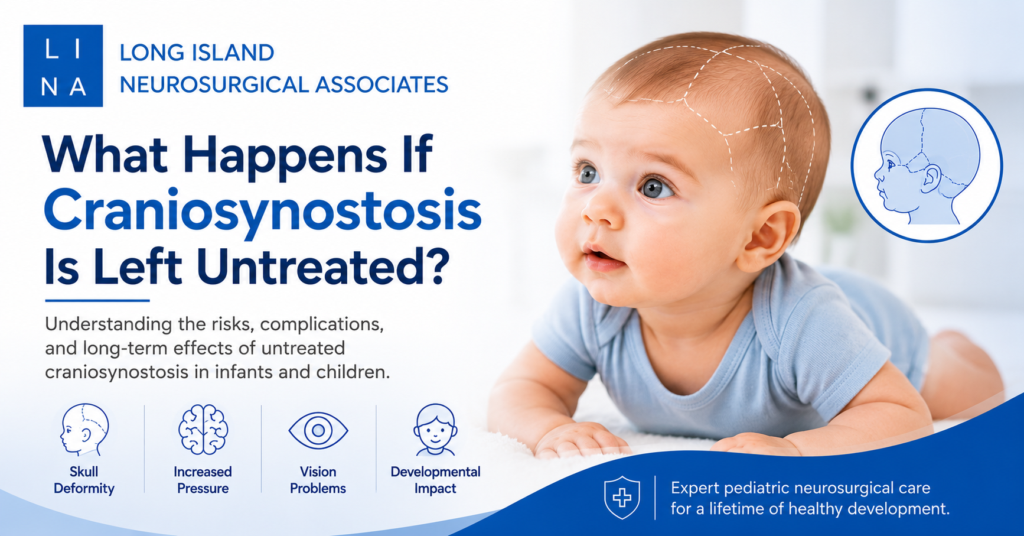
Craniosynostosis is a scary diagnosis for any parent to hear. It’s when one or more of the flexible joints in between the bones of a baby’s skull fuse, or close, too early. These joints, known as sutures, are designed to remain open in the early stages so that the skull can grow in tandem with the brain. If a suture closes too early, the skull can grow into an abnormal shape, not allowing enough room for the brain.
Some families notice a change in the head’s shape first. Others are sent on when a pediatrician feels a raised ridge, sees flattening or notices that the forehead, the area around the eyes, or the back of the head, looks different. Sometimes craniosynostosis happens on its own. In other instances, syndromic craniosynostosis may be associated with other birth defects or medical concerns requiring coordinated care.
Parents can make informed decisions about timing, evaluation, and care when they understand the risks of leaving craniosynostosis untreated. It depends how much it affects, which suture, how bad, how old the baby is and if there are associated conditions. If left untreated, craniosynostosis can cause greater skull asymmetry, higher intracranial pressure, developmental delays, vision problems, headaches, and long-term impacts on self-esteem and quality of life.
Long Island Neurosurgical Associates (LINA) offers family-centered pediatric neurosurgical care for infants and children with suspected or confirmed craniosynostosis. We aim to provide parents with straightforward answers, thoughtful guidance, and a treatment plan that is tailored to the needs of each child.
Craniosynostosis: Skull and Brain Development
A baby’s skull isn’t made of one solid bone. It consists of several plates joined by sutures. The sutures provide room for the infant brain to grow rapidly during the first few years of life. When a cranial suture closes too early, growth in that area slows down or stops. Then the skull can grow in other directions to make way and this can change the shape of the head.
This premature fusion may involve one or several cranial sutures. The pattern of head changes is often dependent on the suture involved. For example, one type of Craniosynostosis may create a long, narrow head shape, while another may affect the forehead or one side of the face.
The change may be obvious soon after birth or may be more obvious in the first few months.
Untreated craniosynostosis can do more than change a child’s looks. In some children, limited skull growth may restrict the brain’s growth or raise the pressure. Some babies are doing well, feeding well and reaching milestones and some babies have symptoms that need to be evaluated quickly. That is why careful clinical judgment is key.
The condition can also be described as nonsyndromic or syndromic. Nonsyndromic cases occur in the absence of a broader syndrome. Syndromic cases may also have additional craniofacial features, limb differences, airway issues or developmental concerns. When syndromic craniosynostosis is suspected, families may need a bigger team of health care providers who can look at the whole child, not just the skull.
At LINA, we focus our evaluations on providing practical answers for parents. The team reviews the child’s history, head measurements, physical findings, and imaging as needed. Parents are provided with an explanation of what is going on, what to look for, and what treatment options may be appropriate for their child.
Parents May See Head Shape Changes
The first visible sign is often head shape. Parents may notice that the skull appears uneven, narrow, flattened, pointed, or ridged. Some babies have an abnormal head shape from positioning . This is not a fused suture . A specialist can help to tell them apart.
- Common signs for which evaluation may be warranted include:
- Stiff ridge on a suture line
- A forehead that is uneven, prominent or flattened
- One eye that looks higher or different shaped than the other eye
- Flattening on the back or side of head that does not improve with repositioning
- Either a long, narrow head or a short, wide head
- Head size measurements, slow or unusual change
- Progressive exaggeration of facial asymmetry
“Parents shouldn’t feel they have to diagnose the issue at home. When in doubt, the best thing is to ask for an assessment. Pictures from the top, front and side may help families understand what they are seeing, but usually a physical medical exam is required.
The timing of care is important because treatment options may be age dependent . Diagnosing early may mean some babies can be considered for less invasive surgery. “Some kids may require a different surgical approach, especially if they’re older, have multiple sutures involved or have a more complicated condition.”
A prompt visit also reduces uncertainty. Many families spend weeks wondering if a change in head shape is normal. A pediatric neurosurgery team can provide reassurance that the skull is developing normally and explain what’s next in terms you can understand.
Concerned parents may notice
Why it matters
Recommended next step
· Raised crest on the skull
May represent fused suture
Request pediatric or neurosurgery consult
· Uneven forehead or between the eyes
May suggest altered skull development
Ask about screening for craniosynostosis.
· Gradual worsening of head shape
May indicate continued growth restriction
Arrange prompt specialist review
· Irritability, vomiting OR vision changes
May be associated with increased pressure
See a doctor straight away
· Developmental delay
Neurological or developmental support may be required
Talk to the Care Team About Milestones
Intracranial Pressure And Problems Of The Nervous System
Intracranial pressure is one of the most serious concerns with untreated craniosynostosis. That means pressure in the head goes up. It doesn’t happen to every kid with craniosynostosis, but it’s one of the reasons doctors get concerned about the condition.
If the skull is unable to grow normally to accommodate the growing brain, pressure can build up. Sometimes the symptoms are mild. For some, the symptoms may become easier to identify as the child gets older.
Symptoms can include headache, vomiting, sleepiness, irritability, poor feeding, vision changes, developmental delay, or behavior change. Older children may report pain in the head or difficulty seeing. Parents might only see feeding problems, crying or a change from their usual behavior, since some babies cannot show pain clearly.
The increase in pressure can impact more than comfort. It can affect learning, vision, attention, coordination and neurologic development. The longer the pressure goes untreated, the greater the worry about permanent effects. If care is prompt, doctors have the chance to relieve pressure, monitor development and reduce the chance of ongoing problems.
If you have seizures, developmental issues, changes in tone, or questions about milestones, neurology input can be helpful. Pediatric neurosurgery deals with the skull and brain, and LINA’s broader multidisciplinary resources may assist with related needs such as craniofacial development, genetics, speech, swallowing and developmental issues. The team approach is particularly useful for children with syndromic features.
Families also need to know that not all symptoms mean a child has dangerous pressure. There are a lot of reasons for the vomiting, fussiness and sleep changes. But parents should seek medical advice if a child with an abnormal head shape or known craniosynostosis develops these symptoms.
Long-Term Quality of Life and Cranial Abnormalities
Cranial deformities can impact a child in many ways. Some effects are physical, like asymmetry of the skull, changes to the forehead, or craniofacial differences. Others are social confidence, school experiences, or comfort in daily living as the child develops.
If craniosynostosis is left untreated, the shape of the skull can become more difficult to correct over time. Visible changes can be more pronounced due to alterations in hair patterns , facial growth and head size . Some children may be timid. Others may be teased or questioned by peers. These experiences can lead to a decreased quality of life even if the neurological symptoms are mild.
There may also be functional problems. Depending on which sutures are involved the child may have vision problems, jaw or facial growth differences, airway problems, or headaches. Care may involve multiple stages and specialists, particularly in complex cases such as syndromic craniosynostosis.
Parents often ask about the long-term outlook for a baby with craniosynostosis. Some children do very well with timely treatment and regular follow up.” However, failure to treat the condition can increase the chance of long term skull deformity, development problems and pressure related symptoms.
Life expectancy: Craniosynostosis does not affect life expectancy. depends on type, severity, related syndromes and other medical issues. For many children the question is not one of mortality but of quality of growth, comfort, appearance, development and confidence.
A well planned treatment plan can help safeguard the child’s physical and emotional wellbeing. At LINA, families are guided in a manner that respects both the medical needs and the emotional toll of making decisions for a baby or child.
Specialized Pediatric Neurosurgery: How It Helps
Families can ease the way with special care. Pediatric neurosurgeons know about skull growth, suture development, brain space and timing of treatment. They can help decide whether monitoring, imaging, helmet therapy after specific procedures, or surgery might be warranted.
Craniosynostosis Treatment isn’t the same for every child. If the care team recommends it, endoscopic craniectomy may be an option for very young children and post-operative cranial helmet therapy may be used. Depending on the age, the involved sutures and the anatomy of the child, other approaches for craniosynostosis repair may be necessary.
The care plan should be individualized, not rushed or one size fits all.
The goal of treatment is to correct premature skull fusion, improve head shape, decrease compression concerns if present, and promote healthy development. Treatment may also help to reduce the need for correction later in some cases.
Families should expect clear communication before, during and after care. Includes discussion of diagnosis, imaging, procedure options, recovery, follow-up visits, warning signs to watch for at home
Parents should feel free to ask questions such as:
- What kind of craniosynostosis does my child have?
- Which suture is blocked?
- Pressure building at all?
- What are the best treatment options for my child’s age and situation?
- What if we wait?
- What follow up will my child need?
LINA’s approach is grounded in thorough evaluation, compassionate communication, and pediatric neurosurgical experience. Families get walked through decisions step-by-step, considering the child’s medical needs and the parents’ peace of mind.
If you are concerned about changes in your baby’s head shape, a ridge on the skull or any other symptoms, an evaluation can provide peace of mind. Early responses can lead to safer planning and better support.
Book a Craniosynostosis Evaluation with Long Island Neurosurgical Associates (LINA)
If your baby has a changing head shape, a raised ridge on the skull, uneven forehead or eye shape, worsening asymmetry or symptoms that might indicate pressure inside the skull, it is worth getting answers from a pediatric neurosurgical specialist. Early assessment can help identify the presence of craniosynostosis, which suture(s) may be affected and what care options may be suitable for your child’s age and condition.
Long Island Neurosurgical Associates (LINA) offers compassionate, family-centered care for infants and children with suspected or confirmed craniosynostosis. The team helps parents understand the diagnosis, review treatment options and make informed decisions with confidence.
You don’t have to wait for symptoms to get worse to seek advice. If you are concerned about your child’s head shape, skull growth, development or comfort, contact Long Island Neurosurgical Associates (LINA) to arrange an appointment. Our team is prepared to offer clear explanations, expert pediatric neurosurgical care and support for your family every step of the way.